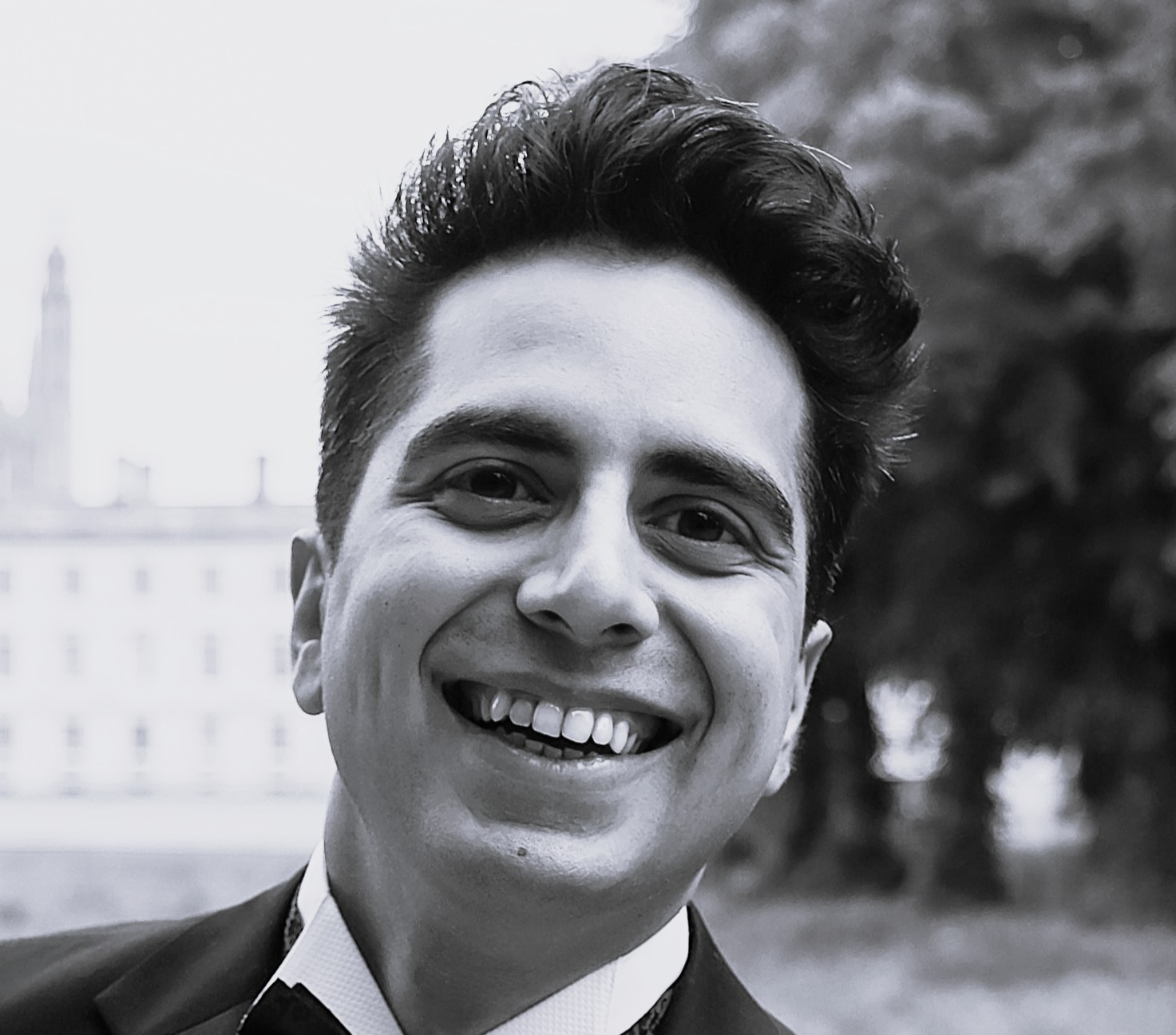
Mo Vali
I am a Physics PhD candidate at the Cavendish Laboratory, University of Cambridge, co-supervised by Diana Fusco, and Pietro Liò. I build machine learning methods and techniques for noisy, high-dimensional scientific data, from surface-enhanced Raman spectroscopy (SERS) to healthcare data. My work centres on:
- Multimodal modelling at scale. Fusing tabular, imaging, sequence and spectral inputs through attention-based architectures for clinical outcome prediction - from raw data through to deployable pipelines across tens of thousands of patient records.
- Tokenisation of noisy SERS spectra. Tokenising raw spectra and combining embeddings from pretrained foundation models to detect signals in surface-enhanced Raman spectroscopy (SERS) data - including the identification of a previously uncharacterised indole derivative in E. coli metabolism.
- Interpretable, uncertainty-aware ML. Prototype-based segmentation, feature attribution and uncertainty quantification, so that models used in clinical settings are legible and calibrated rather than black boxes.
Alongside my PhD I have raised £225K in research funding, including a £150K grant from ai@cam, the University's flagship AI mission.
If you'd like to talk about any of this - or about squash, or 19th-century Russian novels - feel free to drop me an email.
News
| 2026 | Our SERS work identifying a previously uncharacterised indole derivative in E. coli metabolism is out (ACS). | 2026 | New preprint RamanSeg - interpretability-driven deep learning on Raman spectra for cancer diagnosis - is up on arXiv. |
| 2026 | Awarded best paper at AIME 2026 for multimodal deep learning methods for healthcare. |
| 2024 | 1st prize for best presentation at the RCOG World Congress, out of 1,109 eposters. |
| 2023 | Started my Physics PhD at the Cavendish Laboratory, University of Cambridge. |
Selected Publications
-
Nanoplasmonic SERS reveals a previously uncharacterised indole derivative in E. coli metabolism
ACS, 2026 -
RamanSeg: Interpretability-driven Deep Learning on Raman Spectra for Cancer Diagnosis
arXiv, 2026 -
Prediction of Embryo Transfer Outcomes Using Multi-Modal Deep Learning Methods
British Journal of Obstetrics and Gynaecology (AIME 2026) -
Broadband coherent Raman platform for stimulated Raman histology
Proc. SPIE — Advanced Chemical Microscopy for Life Science and Translational Medicine, 2024
Affiliations
- Jesus College, University of Cambridge
- Cavendish Laboratory, University of Cambridge
- Pietro Liò's group -Computational Biology, Cambridge
- Diana Fusco's lab -Biophysics, Cambridge
- thelatestventures
- Lister Fertility Clinic (Prof. Yau Thum)
Things I care about
- AI for healthcare and reproductive medicine
- AI safety and alignment
- Encoding knowledge from the real world
- Open, shareable scientific data
- Widening access to research and higher education
Student supervision
- "T-MOXAI: A Hierarchical Explainability Framework for Temporal Multimodal Data"
- "Uncertainty Estimation Frameworks for IVF Prediction Models"
- "Towards Generalised Biofilm Characterisation Models based on Wrinkle Morphology"
- "Fetal Video Ultrasound Segmentation using State-of-the-Art Computer Vision Techniques"
- "Multimodal Fertility Outcome Prediction using Temporal Ultrasound and Tabular Data"
Things I'm reading
- AI-Safety directions
- Nice exposition on existential risk from AI
- SpectraLLM: Uncovering the Ability of LLMs for Molecular Structure Elucidation from Multi-Spectral Data
- Terry Tao - Mathematical exploration and discovery at scale